
Kyoto, Winter, 2019 – It rained continuously for three days. The pristine town of Kyoto which resisted all temptations of the world and embraced the uninhibited flow of life also let the rains pour down as much as it wanted.
On the very first day, we walked down the alley where the Ryokan we were staying was, tucked neatly into a row of Ryokans, on whose threshold my host, a vivacious septuagenarian, stood waving bye to me! As we reached the bus stop, we bought an umbrella at a Seven Eleven store and joined the queue for boarding a bus.
Kyoto does not have Uber! Cabs are insanely expensive, frowned upon as ostentatious and considered in abstruse to the acceptable way of living in Japan. You don’t take cabs in Japan, if you do, you will be given a disparaging look and sometimes even an advise on why it is important to save money in life!
And you might want to take their advice, it may prove immensely helpful!
For instance, my morning at the Ryokan starts with my host making me sit on a straw mat lined with cushions and make me stretch my feet to a pit below the table which is connected to a hearth. The hearth provided the exact warmth my feet needed and in turn conduced it to my body. She also laid down a warm breakfast on the small table that filled my heart with happiness.
Our mornings began with discussing the itinerary for the day, and she would encourage me to walk or cycle to the destination and I would cautiously ask her if there are any bus routes to the destination. She encouraged me with a nod, but at the end of each day my step count would shoot upward to 20,000 steps. She would also nudge for changes to the itinerary and from her advice we discovered the hidden gems of Kyoto and by the third day we would drop our itineraries in the room and went to breakfast to draw fresh plans for the day.
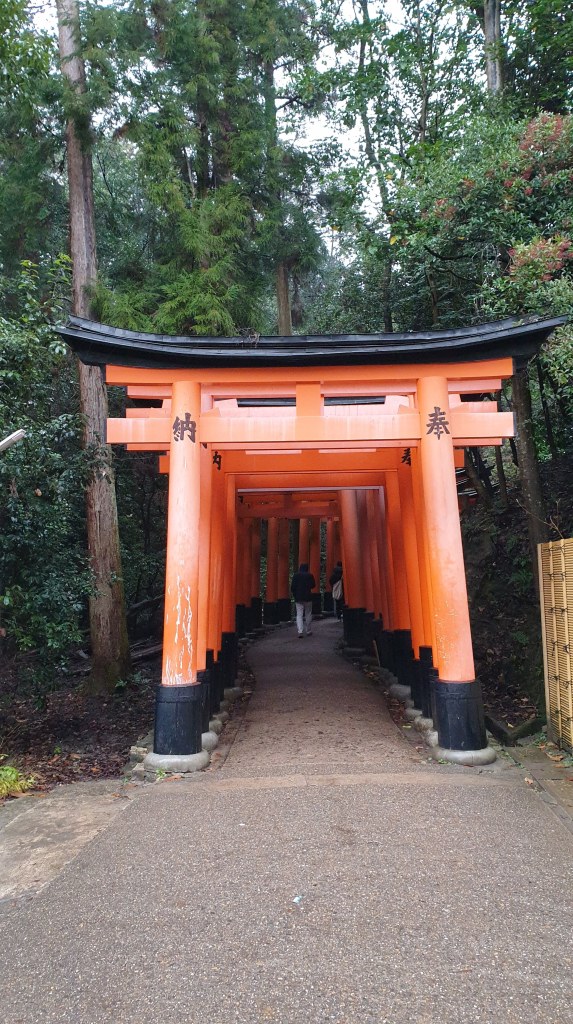
Kinkaku-ji, Ryoan-ji Hojo Teien, Kiyomizu-dera, Arashiyama bamboo forest, Fushimi Inari and many more destinations filled our itineraries. She would ask us to take a particular route to a destination, it was definitely a longer walk but it was filled with shops of ceramic ware, hand fans (Sensu and Uchiwa), Matcha tea, Takoyokis, Bookshops, Hoshino Coffee and more.
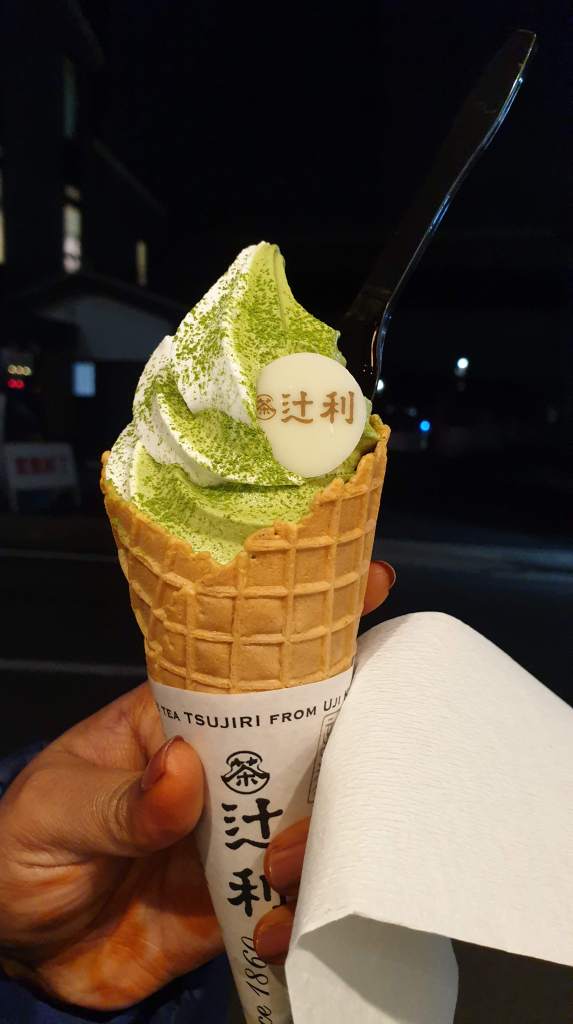
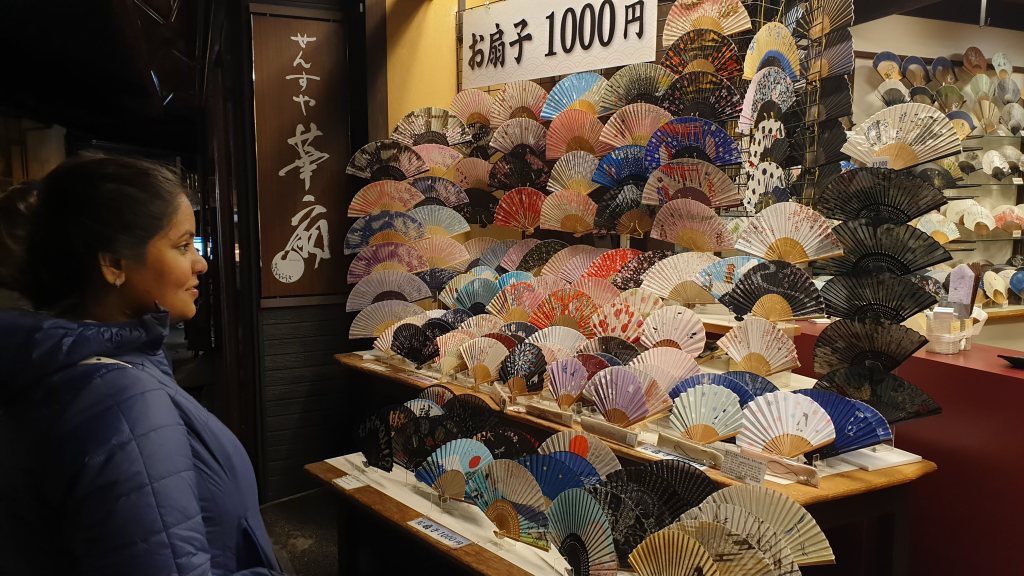
Kyoto holds a special place in my heart! If I close my eyes, I can still be transported to Ryoan-ji Hojo Teien, Rock Garden, which has been around for centuries and is an epitome of tranquility. The garden’s elements, gravel representing water and rocks representing land or islands, are symbolic to the core concepts of Zen Buddhism. There is a viewing deck that opens to the rock garden where you can sit and look into the garden for some time. Tourists pile on this deck but once you close your eyes, the silence terrifies you, the sheer power of the contemplative atmosphere grips you and you might want to open your eyes to see people around you who are doing the same.
Kiyomizu-dera, is a part of the Historic Monuments of Ancient Kyoto UNESCO World Heritage. The vast temple holds secrets and stories around every corner and offers one of the most stunning views of Kyoto from the aerial deck. The Spear of Benkei is a sight to behold, a stunningly large spear, which no average human can wield. One is free to give it a try! It was supposedly used by the great warrior-monk Benkei who is most famous for posting himself at a bridge in Kyoto and defeating 999 samurai and collecting their swords. The 1000th warrior he faced was Minamoto Yoshitsune who defeated him.

As we were walking the great halls of Kiyomizu-Dera, I observed a queue gathering near a counter. I came to know after standing in the queue for a long time and guessing multiple possibilities that it is where you are offered a scroll of paper that predicts your future. The monk at the counter shakes a tin and lets you pick a scroll from it. I opened it with enthusiasm but found that it was entirely in Japanese, I kept the paper scroll safe to take it back to my host who I thought may help me understand what the scroll says.
On our way back to our Ryokan, we decided to take a bus and was looking at a physical map to understand which bus to board. Feeling triumphed, we boarded the correct bus and started talking about how well we know now to get around in Kyoto. It was late and the bus was empty, we heaved a sigh of relief and was waiting for our stop to come! It took us some time to notice that the driver kept turning around and looking at us, we understood that he wanted to ask us something and we went to him. He told us that he had no idea why we were in the bus as he was headed back to the depot!
We were thoroughly embarrassed and putting all our shame aside we desperately asked him how to get to the next stop. The kind person let us down in a place where we could easily find the stop. We boarded the next bus which happened to be really crowded but we were quite relieved!
On the next morning I took my scroll to our host and asked her what it said. She looked at the scroll, knitted her brows, and looked at me earnestly. She told me I need to expect some rough stretches soon but assured me my life would turn around to be good. I ruminated on what she said and looked out at the garden in front of the verandah pensively. She returned to me in a while and invited me to attend a tea ceremony with her. I was ecstatic as I have heard legends about the traditional tea ceremonies and never thought I would be invited to one.
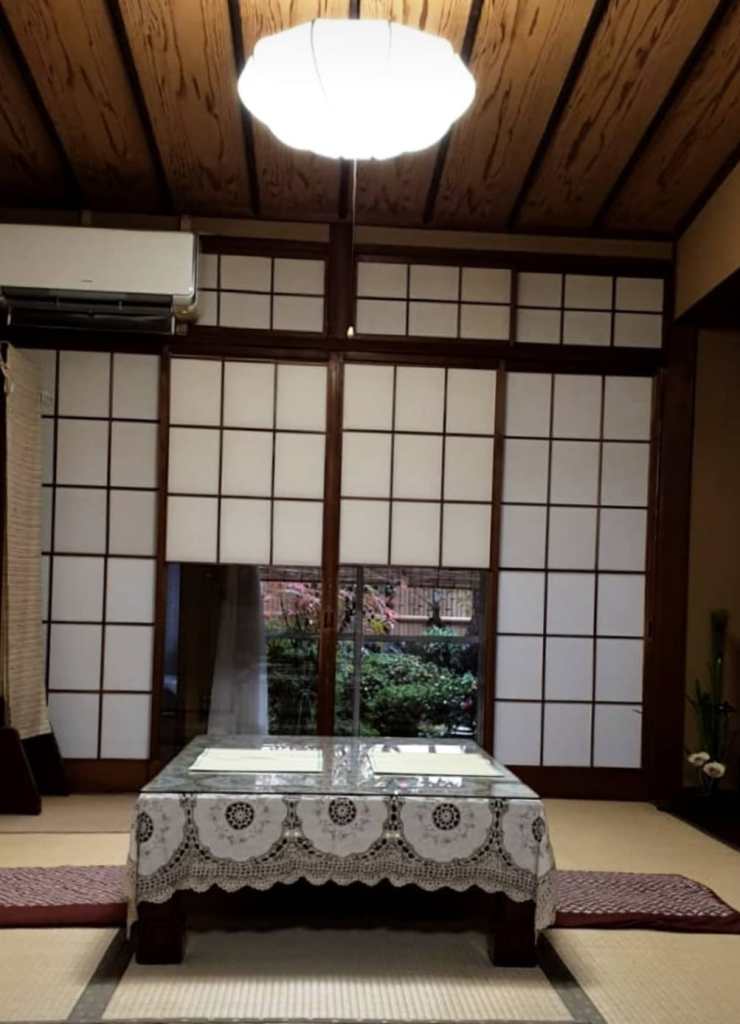
The rains still drizzled, the garden was abuzz with its patter and the flowing water made patterns on the ground. We sat down on the floor and our host brought exquisite ceramic tea ware in front of us. She whisked the matcha with bamboo and we were mesmerized in its redolence which continued to fill the room. As she poured the tea for us she told us two principles to enjoy the tea ceremony:
- Respect and appreciate the artisan who has endowed us with the beautiful art to look upon as we partake the tea
- Respect and appreciate the parties attending the tea ceremony
Time stood still as rains continued to pour down and the ceremony outlived my expectations.
As we closed the ceremony, my host asked me, “What do you think we do if the tea ware breaks or cracks?” I looked at her as I hesitated to say that you may buy a new one, because by then I had evolved in my understanding of the way of life in Kyoto! Hence, I did not say anything, she answered to me with a smile “Kintsugi”!
Kintsugi also known as kintsukuroi (金繕い, “golden repair”), is the art of repairing broken pottery by mending the areas of breakage with urushi lacquer dusted or mixed with powdered gold,silver or platinum.
The 15th-Century practice of kintsugi, meaning “to join with gold”, is a dictum she passed on to me to embrace missteps in life, enrich the cracks with meaningful experiences and learnings, and evolve to be greater in value as a person!
As I came back I did find misfortunes waiting for me, but I embraced it with the help of some of the gifts from my host from Kyoto – Antique Tea Ware, Ceremonial Matcha and Wisdom.


 Melange
Leave a comment